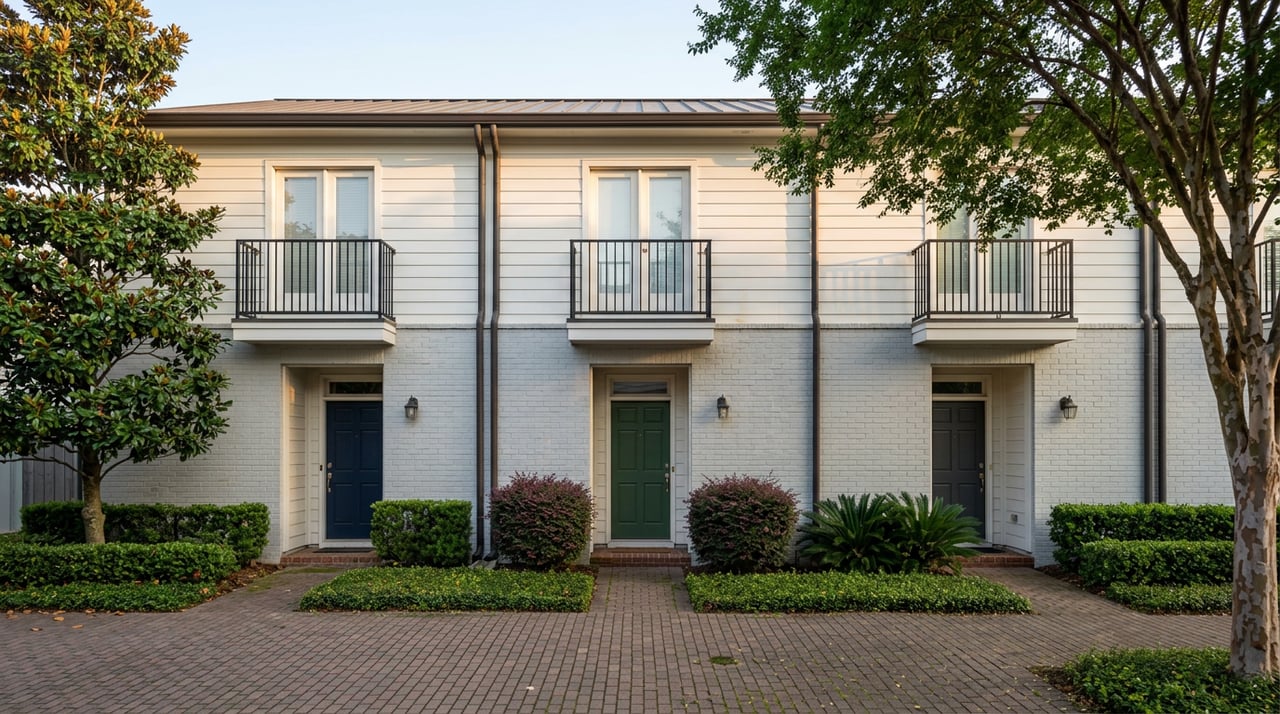
According to a News 6 report, in October 2023, Dennis James had lived in his Baldwin Park townhome for twelve years. He and his 61 neighbors in a group of attached homes known as the Issa 28 townhomes had watched their monthly association fee climb from $424 in 2022 to $758 in 2023. Then the board floated a proposed number for 2024 that made James start packing boxes in his head before anyone told him he had to: $1,222.42 a month.
James's reaction was short and unfiltered: "It was kinda like what the — huh?"
James was not absorbing a routine cost-of-living bump. He was looking at a fee nearly triple what he'd paid two years earlier, for a townhome he already owned, inside a neighborhood widely regarded as one of the best-functioning master-planned communities in Orlando.
His story matters to anyone shopping Baldwin Park today, not because it will repeat on your street, but because it illustrates how the fee can vary from one address to another. The HOA fee quoted on a Baldwin Park home is not one stable number that behaves the same way across the neighborhood. It is whichever slice of a multi-layer governance structure happens to apply to that specific address, and those slices do not move together.
One Address, Up to Four Bills
Baldwin Park was built on the former Orlando Naval Training Center, and the governance that came with it was never a single homeowners association writing one check. Depending on the product type you're buying, you may be answering to as many as four separate entities:
- The Baldwin Park Residential Homeowners Association, the master association covering common covenants and shared community areas, established in May 2002.
- The Baldwin Park Joint Committee, formed the same year to coordinate matters that cross multiple sub-neighborhoods.
- A product-specific sub-association, such as the Issa 28 townhomes or Baldwin Park Condo Association 6, which handles the roof, exterior walls, and shared structure that a detached-home buyer would insure and maintain alone.
- The Urban Orlando Community Development District, a unit of local government created under Chapter 190 of the Florida Statutes, which bills separately through your county property tax statement rather than through the HOA.
A detached single-family home typically touches only two of these layers, the master association and the CDD line on the tax bill. A townhome or condo owner touches all four, because someone has to fund the building envelope that a detached owner insures individually. That split is not a Baldwin Park quirk. It's how attached-home associations work across Florida. What makes Baldwin Park worth a longer look is how differently the sub-association layer can move from one product line to the next inside the same zip code.
Why the CDD Line Confuses Almost Everyone Who Googles This
Search Baldwin Park and CDD together and you'll find contradictions. Some sources describe the community as having no meaningful CDD. Others quote annual figures in the low thousands. Both are grabbing at a half-truth.
The Urban Orlando CDD's bonds have been paid down enough that its recent budget cycles, including the fiscal year 2026 budget the board approved in 2025, center on levying an operations and maintenance assessment rather than carrying a heavy bond payment, based on the district's published finances.
That's a meaningfully different bill than the fresh, decades-long bond assessments homebuyers encounter in newer build communities farther out toward Lake Nona or Horizon West. The honest answer to "does Baldwin Park have a CDD" is yes, but the character of that bill has shifted as the original construction debt retired. The dollar amount attached to any specific parcel is worth confirming for that parcel, not assumed from a blog post. Your title company or the Orange County Property Appraiser's records can show you the exact non-ad valorem line for the address you're considering.
What Made Issa 28 Different
The Issa 28 spike wasn't landscaping or lifestyle amenities. Local reporting traced it to property insurance specifically. One Baldwin Park resident described her association's insurance premium for exterior coverage nearly quadrupling, rising from $109 to more than $400 a month, according to a WFTV report on the fee increases. The report quoted resident Susan Stiner describing what that premium buys: "We are only paying for insurance that is basically the drywall to the exterior of the building." She said she was separately paying close to $6,000 a year for coverage on the inside of her own townhome, on top of that association premium.
This is a Florida-wide property insurance story wearing a Baldwin Park zip code. Every attached-home association in the state has spent recent years re-shopping master policies against a harder market.
The Issa 28 owners retained attorney Jim Byrd to press their board and management company, Sentry Management, to open the association's books. When asked in a News 6 report whether Florida law caps how much an HOA can raise fees in a single year, Byrd gave the answer that should stick with any buyer reviewing association paperwork:
"That's a bit of a yes and no question in Florida."
Nothing in state law puts a hard ceiling on how far a sub-association's fee can move year over year. A board has to justify the number to its own membership, and owners can organize and push back, but there is no automatic percentage cap protecting a new buyer from a decision the board made before closing.
The Diligence List Before You Waive Your Review Period
None of this means treat every Baldwin Park listing with suspicion. It means know which of the four bills applies to your specific address before you assume the number on the listing portal is the number you'll actually pay.
- Confirm which specific sub-association governs the exact address, not the Baldwin Park master association in general. A townhome across the street from a detached home may answer to a completely different sub-association with its own separate finances.
- Request that sub-association's last two to three years of approved budgets and board meeting minutes, not just the master HOA's summary documents.
- Ask directly whether the association's property insurance policy has been rebid or renewed in the most recent cycle, and what changed in premium or coverage.
- Ask whether any special assessment has been approved, proposed, or even discussed in the last twelve months of minutes, even if nothing has been billed yet.
- Confirm the exact CDD non-ad valorem line for that parcel through the county property appraiser rather than relying on a community-wide average.
- Request an estoppel letter close to closing that reflects the current fee for that specific unit, not a figure from an earlier year.
The Issa 28 case became local news precisely because it was unusual, a single product line absorbing an outsized insurance hit inside a neighborhood most owners still describe as one of the few Florida master-planned communities that genuinely functions after dark. The lesson isn't to avoid Baldwin Park. It's to confirm which of the four bills applies to your unit before you sign off on your review period.
Comparing Two Baldwin Park Listings That Look the Same
This is the part that should change how you compare homes here. Two listings on the same street, similar square footage, similar list price, can carry meaningfully different total monthly costs if one sits inside a sub-association that just rebid its insurance and one doesn't, or if one is a detached single-family paying only the master association and the CDD line while the other is an attached product carrying all four layers. Comparing two Baldwin Park homes purely on the advertised HOA number is comparing incomplete numbers. The sub-association's documented trajectory, not the headline fee, is what should shape your offer.
A Few Questions Worth Asking Before You Go Under Contract
How can I check whether a parcel has a CDD assessment? The amount, if any, is worth confirming for your specific address rather than assuming from an online estimate.
Is a CDD assessment the same thing as an HOA fee? No. The CDD is a unit of local government created under Chapter 190 of the Florida Statutes, and its assessment appears on your county property tax bill. The HOA, the Joint Committee, and any sub-association are private organizations billing separately, usually monthly or quarterly, and none of that shows up on your tax bill.
Can I see a sub-association's financial documents before I make an offer? Your agent can request them as part of the offer or during the association document review period once you're under contract. That packet, not the master HOA's general summary, is where you'll find the specific sub-association's recent budgets and minutes.
Baldwin Park earned its reputation the hard way, with walkable streets, a town center that still draws people out after dinner, and lake access most Florida master-planned communities never deliver. None of that changes because one product line inside the neighborhood had a rough insurance renewal. What changes is how carefully you read the paperwork before you write an offer. If you're comparing Baldwin Park addresses and want help figuring out exactly which layer of fees applies to a specific home, The Baldor Group can walk the documents with you before you waive anything.
This article is general information, not legal, tax or financial advice. Consult a qualified professional about your situation.